You Called It First

APRIL FOOLS, FLOODS & FLOWERS SERIES—ARTICLE XII
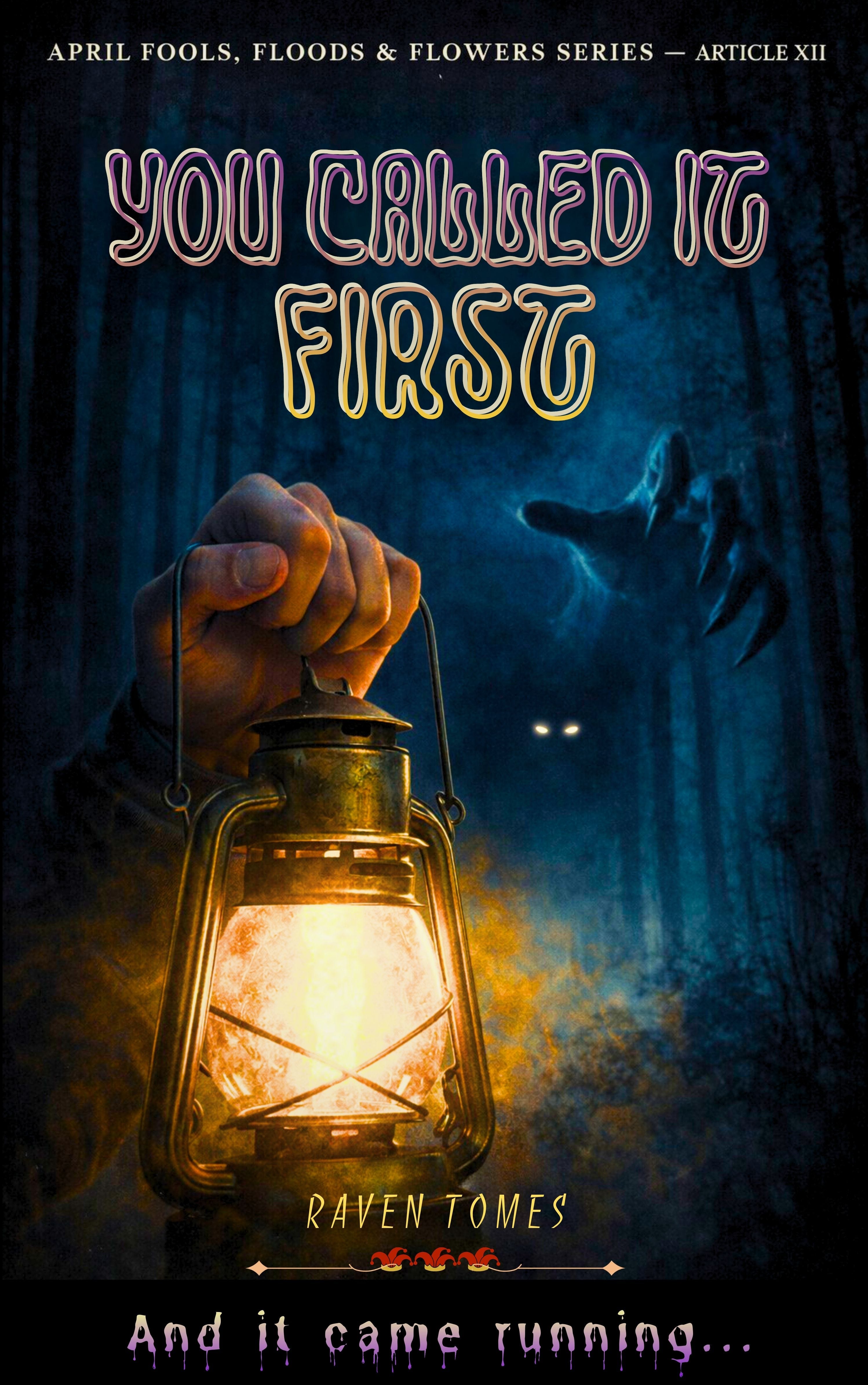
April Fools, Floods & Flowers Series, where not every sound is harmless… and not every call goes unanswered.
By Raven Tomes
They tell you not to whistle in the woods, not as a rule that needs explaining or something meant to frighten you, but as a quiet instruction passed along the way people repeat things they were told without ever needing to question why. It’s said casually, almost dismissively, the kind of warning that loses its weight the more often it’s heard.
Most people don’t take it seriously, and that’s where it holds. The oldest tricks have never relied on fear. They rely on dismissal, on the quiet certainty that whatever came before no longer applies, that the rules belonged to someone else, somewhere else, and that nothing in the dark is listening closely enough to matter.
That is where it begins.
In parts of Appalachia, the stories are not told loudly. They move in fragments, in pauses, in the way someone hesitates just long enough to suggest there is more they are choosing not to say. The warning remains simple, even when the explanation is not given.
Don’t whistle.
Not unless you want something to hear you.
It starts the way most mistakes do, small enough to feel harmless. A sound made without thinking, a tune carried absently into a place that was never meant to receive it. It leaves you easily, without weight, without intention.
And for a moment, nothing happens. No shift, no response, just enough silence to convince you that it was never anything at all.
Then it comes back.
Not as an echo, not as anything clean or familiar, but as something that almost matches what you made. The note is slightly off, just enough to feel wrong while still being recognizable. It comes from somewhere beyond where you can see, from a distance that doesn’t quite make sense.
Most people stop there, or they explain it away. Wind through branches, sound bending through distance, something natural reshaping what it carries. They create an answer that allows them to remain where they are.
But some don’t…
Some whistle again.
And that is when it answers, closer this time, clearer in a way that removes comfort instead of bringing it. The sound adjusts, aligns more closely with yours, as if something is paying attention in a way that goes beyond hearing.
That is when the air changes. Not enough to name, not enough to prove, but enough to notice if you’re paying attention. The quiet no longer feels empty. It feels occupied, as if something has settled into it.
There are accounts, rarely written and often dismissed, of people who heard their own voice return to them from the trees, not as memory, but as something being used. At first it is imperfect, an imitation that doesn’t quite hold, but it improves. It repeats, reshapes, refines itself with each attempt.
And that is when the realization comes, not when they hear it, but when they understand what it is doing.
Because it was never trying to find them.
It was waiting for them to announce themselves.
To prove they were there.
To give it something to follow.
Once that happens, there is no need for urgency. Whatever is out there doesn’t rush, doesn’t reveal itself, and doesn’t need to come closer, because it has already crossed whatever distance mattered. It has what it needs.
A sound. A pattern. A voice that can be studied, learned, and eventually used.
Because the woods do not return what they take. They change it, reshape it, and give it back in ways that are never meant to be recognized as the same thing.
And somewhere beyond sight, something waits for the moment you stop listening carefully enough to notice the difference, because by then it won’t need you to answer anymore.
It already knows how…Because it didn’t find you.
You called it first.
🃏🃏🃏
If you hear something answer your whistle, do not respond.
Because the moment you do, it learns how to call you back.