Wolfsbane & Nightshade

April Fools, Floods & Flowers Series—Article XXX
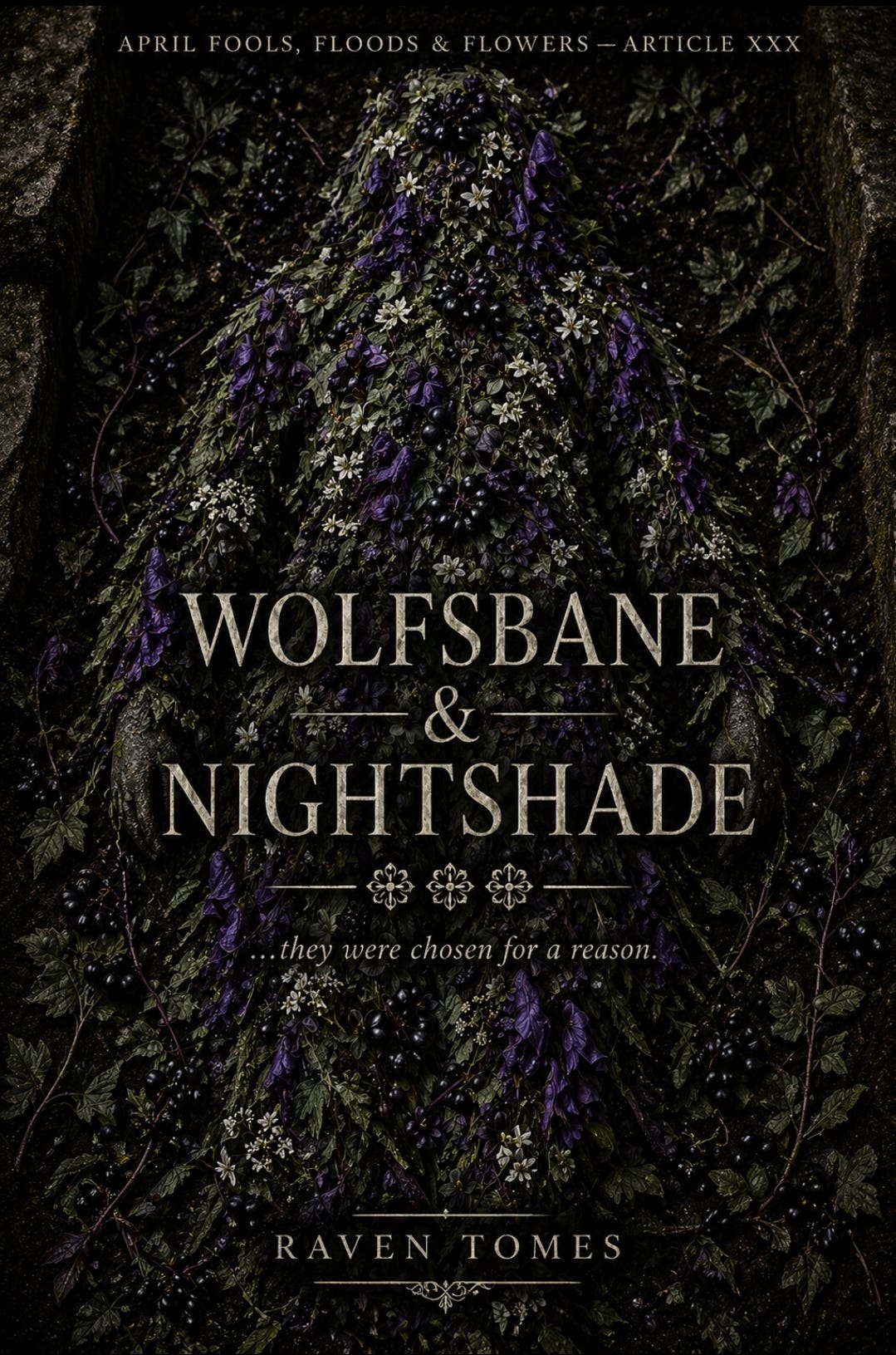
Finale of the April Fools, Floods & Flowers Series , where what is placed is not always meant to grow… and what is covered is not always meant to rest.
By Raven Tomes
There are ways the dead are prepared that have nothing to do with appearance.
Flowers are often associated with burial for what they represent—grief, remembrance, continuity. They are arranged, displayed, placed in ways that make the moment easier to face.
That is what is seen.
What is less often considered is what has been placed with the body when the purpose is not symbolic.
Historically, plant matter has been used in burial for practical reasons…herbs to mask scent, oils to slow change, materials chosen not for beauty but for effect. Preservation is measured, intentional, and controlled as much as it can be, given what cannot be stopped.
In certain records, there are references to plants that were not selected for comfort or tradition, but for what they do.
Nightshade and wolfsbane.
Both known for toxicity. Both associated with deterrence. Both capable of affecting what comes into contact with them.
These are not decorative choices. They are functional.
Nightshade compounds have long been documented as harmful in even small quantities. Wolfsbane, historically used as a poison, was applied to prevent interference—from animals, from handling, from anything that might disturb what had been placed.
But their placement suggests something more specific than deterrence.
They were not placed for what they would do to the body, but for what might come to it.
In burial contexts, their presence is not meant to be visible. They are worked into the preparation…layered beneath wrappings, placed within folds, set where contact is unavoidable.
Not to preserve life, but to manage what follows it.
The process is methodical, with nothing left untreated or exposed, each layer serving a purpose that is not explained in ceremony but understood in outcome.
Because what is being addressed is not the moment of death, but everything that comes after. Burial is often assumed to be a closing, a return, a way of allowing the body to become part of something else, but not all preparations are designed for return.
Some are designed for containment.
To limit interaction, reduce disturbance, and ensure that what has been placed remains as it is—not untouched, but unaltered in ways that cannot be controlled.
In that context, the selection of plant matter becomes precise. Nothing is chosen at random, and nothing is included without reason.
What is placed with the body is meant to affect what comes near it—and what does not.
🏵💀🥀
They covered it in flowers, not to honor what was left, but to control what might come near it. The selection was not symbolic. It was deliberate.
Nothing was left exposed. Nothing was left to chance.
And when it was finished, what remained was not simply buried—it was sealed against anything that might try to return, disturb, or take hold again.
It wasn’t meant to be honored.
It was meant to make sure…nothing ever touched it again.
💀🐦⬛🪦
Some stories don’t end here.
Subscribe before the next one finds you.